
Crate sizes for flying
Airlines check every crate against the IATA Live Animals Regulations. Measure your pet, find the size, and see what gets a crate turned away at check-in.
Which crate does your pet need?
Airlines need your pet to stand without their ears touching the roof, turn around, and lie down naturally. Measure your pet and move the sliders.
From the tip of the nose to where the tail starts
From the ground to the top of the front elbow
Across the widest point of the shoulders or hips
From the floor to the top of the ears or head
How the size is worked out (IATA)
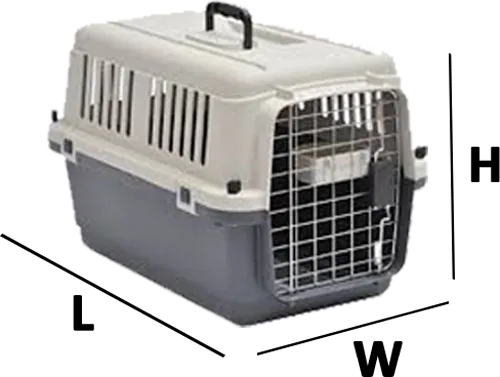
- Length = A + ½B = 55 + 9 = 64 cm
- Width = C × 2 = 22 × 2 = 44 cm
- Height = D = 45 cm
Recommended crate
KN-103
66 × 47 × 46 cm
Length × width × height + Tray, 26 × 18.5 × 18 in
- Crate weight:
- about 8.16 kg (18 lb)
Standard crate types, KN-101 to KN-308
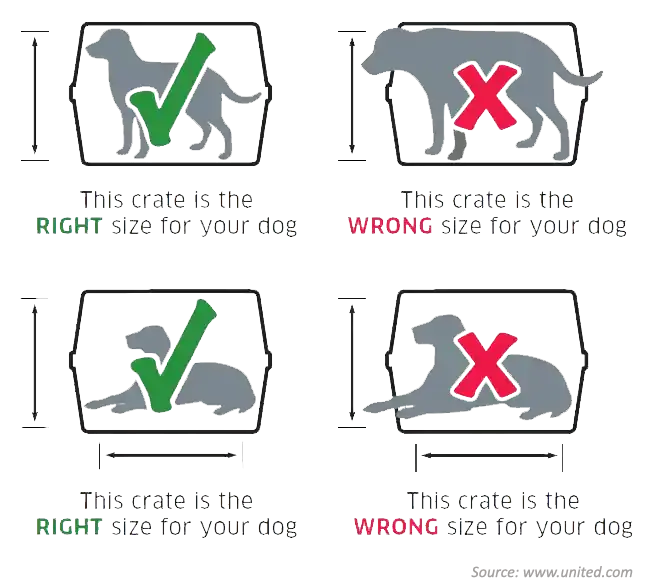
Each pet in the crate must have enough space to stand, turn around normally while standing, sit up, and lie down in a natural position.
| Crate type | Crate size (cm) | Crate size (in) | Crate weight | Ask |
|---|---|---|---|---|
| KN-101 | 49 L × 32 W × 30 H + Tray | 19 × 12.5 × 11.8 in | 3.18 kg (7 lb) | Ask about KN-101 |
| KN-102 | 58 L × 37 W × 35 H + Tray | 22.8 × 14.5 × 13.7 in | 5.90 kg (13 lb) | Ask about KN-102 |
| KN-103 | 66 L × 47 W × 46 H + Tray | 26 × 18.5 × 18 in | 8.16 kg (18 lb) | Ask about KN-103 |
| KN-104 | 81 L × 55 W × 61 H + Wheel + Tray | 32 × 21.5 × 24 in | 10.89 kg (24 lb) | Ask about KN-104 |
| KN-105 | 91 L × 64 W × 69 H + Wheel + Tray | 35.8 × 25 × 27 in | 14.51 kg (32 lb) | Ask about KN-105 |
| KN-308 | 100 L × 68 W × 77 H + Wheel | 39.5 × 26.7 × 30.5 in | 21.32 kg (47 lb) | Ask about KN-308 |
Source: www.united.com. Crate weights are estimates.
Is the crate big enough?
Your pet must be able to stand without their head touching the roof, turn around, sit up, and lie down naturally.
Crate construction
Each crate must have ventilation. A crate that fails any of these checks can stop your pet from boarding.
The crate must
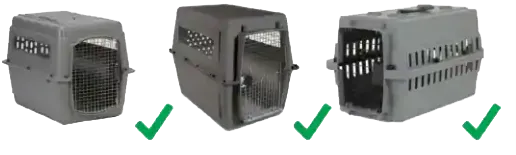
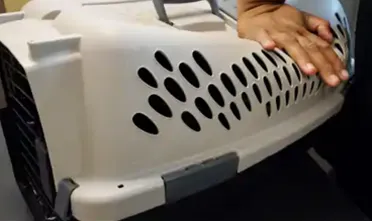
- Be made of rigid plastic, wood, or metal that’s sturdy enough to resist bending when firm pressure is applied.
- Have a solid roof with no doors or ventilation openings.
- Have only one metal door, which must close securely yet allow your pet to be reached in an emergency.
- Have crate hardware that’s in good working condition.
- Have a nut and bolt firmly tightened in each hole that connects the top and bottom of the crate. The bolt must be metal. The nut may be metal, nylon, or plastic, as long as it is unbreakable and holds the two halves securely.
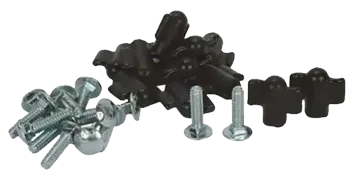
The crate must not
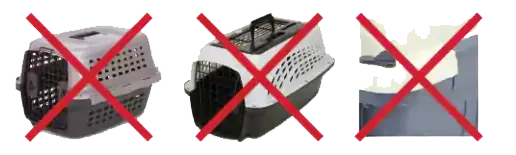
- Have door openings on top, or have more than one door.
- Be made entirely of cardboard, welded or wire mesh, wicker, or other collapsible materials.
- Have a plastic or fiberglass door.
- Have side plastic latches, unless extra holes have been drilled and metal bolts added to secure the crate.
- Have wheels, unless they are removed, locked, or firmly taped so the crate can’t roll in transit.
- Be made of plastic that bends when pressure is applied.
Getting your pet used to the crate
It’s very important that your pet is used to a crate designed for airline travel, which is different from a wire training or sleeping crate. Start weeks before the trip.
Step 1: Leave it open
Put the crate in the living room, door open, with a favourite blanket inside.
Step 2: Feed inside it
Give regular meals and good treats inside the crate.
Step 3: Close the door briefly
Close it for 5 minutes while you sit next to them. Reward calm behaviour.
Step 4: Short car rides
Drive around the block for 15 minutes so the engine noise becomes normal.
Step 5: Pack your scent
On travel day, put an unwashed T-shirt of yours in the crate.
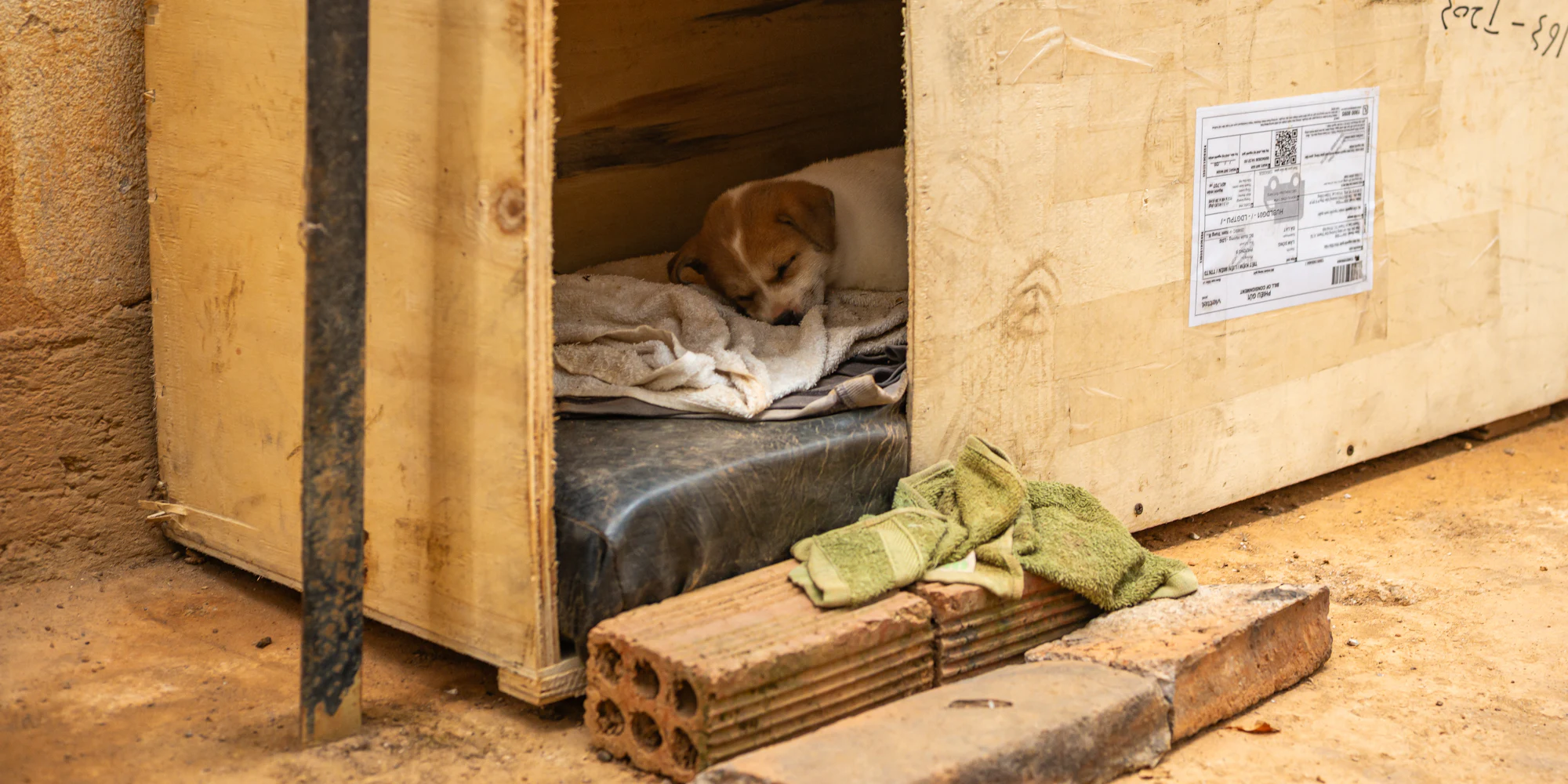
Need a crate?
We supply new IATA crates in every standard size, and build custom wooden crates for large or snub-nosed breeds.